About
How do institutions that cannot afford to fail actually transform themselves with AI?
Erik Caldwell works at the intersection of AI, government and enterprise transformation, focused on how institutions move beyond AI pilots into governed production systems, redesigned workflows, digital service delivery and measurable operational outcomes.
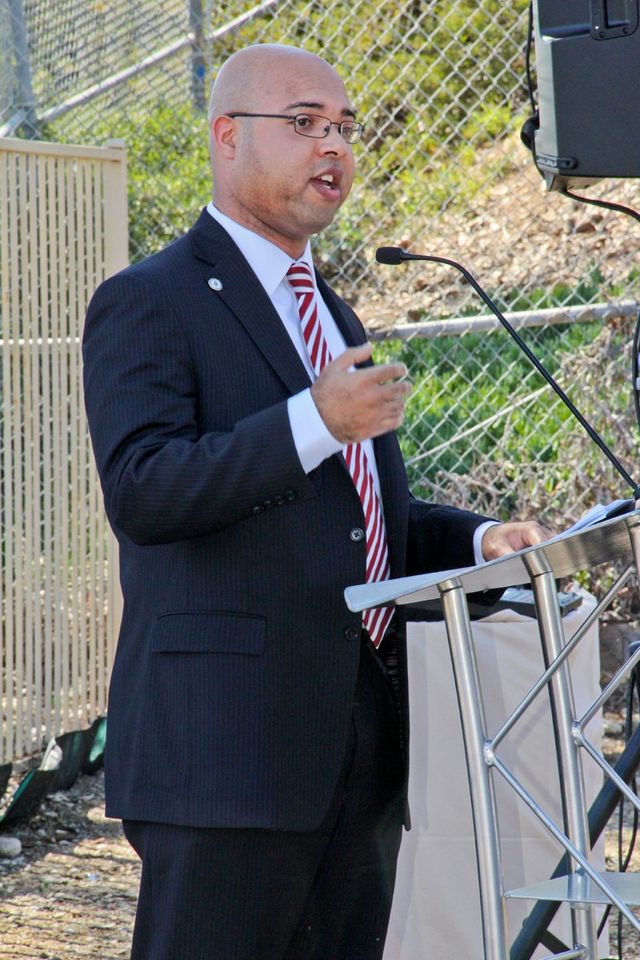
Three sides of the same problem
I have sat on three sides of this. I have led transformation inside a $1.4 billion-a-year municipal organization responsible for services and operations that people depended on every day. I co-founded a GovTech company that sells to governments. And today I work on transformation inside an operator whose systems run continuously and cannot simply be taken offline for an experiment.
Rebuilding before transforming
My career began in local government policy and operations before I became Director of the City of San Diego's Economic Development Department, which I re-established after it had been disbanded. Rebuilding a department teaches you something founding one does not: before you can transform an organization, you sometimes have to rebuild its mandate, credibility and ability to execute.
Running a $1.4 billion-a-year city organization
I later served as Deputy Chief Operating Officer for Smart and Sustainable Communities for the City of San Diego. The work was not simply about overseeing departments. It was about helping transform how a $1.4 billion-a-year city organization operated and delivered services to a population of more than 1.4 million people.
My portfolio included Development Services, Economic Development, Mobility, Planning and Sustainability, with responsibility for organizations whose decisions shaped what could be built, how businesses interacted with government, how communities developed, and how quickly residents and businesses could get things done.
A major part of that work was digital transformation. We pushed to rethink service delivery around the customer rather than around the structure of City Hall, modernize processes that had accumulated decades of complexity, use data to manage performance, digitize interactions that had historically required paper and counters, and redesign workflows before simply applying new technology to old processes.
That distinction has stayed with me.
Since City Hall
I went on to become Vice President of Data Strategy at The Atlas, co-founded Metropolis IQ Technology, and today serve as Head of Transformation at Cubic Transportation Systems.
Along the way I trained as a full stack data engineer, and I have been the lead developer or architect on dozens of AI applications and deployments. I write about the middle layers of AI transformation because I have built them, not only overseen them.
- Education
- BA in Political Science, California State University San Marcos, 2004
- MBA, San Diego State University
- Technical
- Full stack data engineer; lead developer or architect on dozens of AI applications and deployments
Momentus Capital

I serve as Vice Chair of the Board of Momentus Capital and chair its Governance and Nominations Committee.
Momentus Capital is the brand for a family of mission-driven lenders that includes CDC Small Business Finance, Capital Impact Partners, and Momentus Securities. Together they finance what a community needs in order to build wealth: small businesses, health clinics, schools, affordable housing, grocery stores, and cooperatively or employee-owned companies. The work is national, with deep roots in California, the Southwest, Detroit, Atlanta, and the Mid-Atlantic, and it reaches borrowers that conventional capital markets have consistently passed over.
My work sits on the governance side rather than the lending side, and I think a board has two jobs. The first is making sure the people running the organization have what they need to do the work, which means capital, clarity about priorities, and honest counsel when the call is hard. The second is making sure the institution outlasts everyone currently in it, so the lending continues through leadership changes, credit cycles, and shifts in policy. Most of what I do is the second job. Who sits on the board, how it is recruited, how committees are structured, and how decisions get made and recorded are not glamorous questions. They are what determines whether an organization can hold its nerve under pressure, and pressure is exactly when mission-driven institutions drift away from the people they exist to serve.
I take it seriously for a simple reason. Access to capital is the difference between an idea and a business, and between holding a job and owning something. Income gets you through the month. Ownership is what compounds, what survives a layoff, and what passes to the next generation. For a lot of families and a lot of neighborhoods, the gap has never been talent or work ethic. It is that nobody would underwrite them.
What all of that taught me
Underneath the AI are data access, architecture, platform decisions, security, governance and controls. Above it are workflow redesign, organizational change, operating models, adoption and measurement.
The technology itself may be 30 percent of the work. The harder question is whether an institution can absorb the technology and change how it operates around it.
When the organization cannot afford to fail
That matters even more when the organization cannot afford to fail. In a low-risk environment, a bad AI output might create an embarrassing answer or a few minutes of rework. In transit, water, power, aviation, public safety or other essential services, a bad decision can become an operational incident.
That distinction is not rhetorical. It means the same underlying technology requires very different implementation approaches depending on what it touches.
The questions I spend my time on
Those are the questions I spend most of my time thinking about now:
- What has to be true before an AI capability reaches production?
- How much authority can a workflow safely hand to a machine?
- Where should humans remain in the loop?
- How do you redesign the workflow instead of simply inserting AI into an existing process?
- How do you know whether a pilot actually improved the operation?
- And perhaps most importantly, does the improvement survive when you multiply it by hundreds or thousands of employees doing real work every day?
Where the thinking lives
I write about these questions in The AI Transformation Field Guide. The subject is Institutional AI: the move from AI pilots to operational transformation, and how institutions get there without breaking the things that cannot break.
If you are working through the same questions, I am always interested in comparing notes, sharing ideas and learning what others are seeing in practice.